In order to further advance the reform of undergraduate education and teaching at Shenzhen University and fully implement the university's arrangements for the great discussion on education and teaching, on the morning of May 14, 2026, Deputy Director Zheng Zhiping of the Academic Affairs Office led staff from the Office's various divisions to the School of Marxism to conduct a research seminar on the great discussion of undergraduate education and teaching reform. Liu Zhi, Dean of the School of Marxism; Ren Heng, Vice Dean for Teaching; and the directors of the School's teaching and research sections, representatives of key teachers and the teaching secretary attended the meeting. The meeting was chaired by Vice Dean Ren Heng.
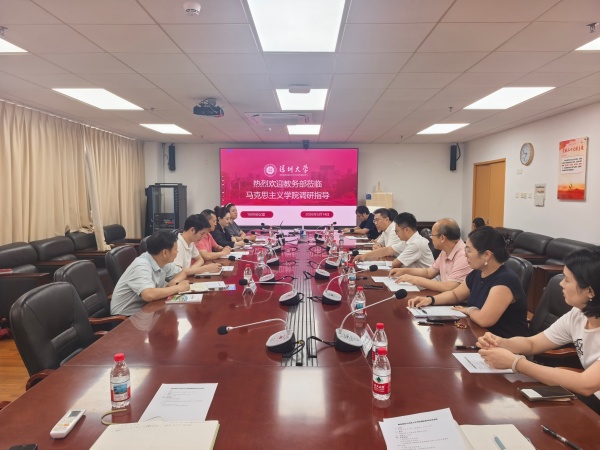
Dean Liu Zhi extended a warm welcome to the delegation from the Academic Affairs Office and expressed sincere thanks for the long-standing support of the Academic Affairs Office and other functional departments. He pointed out that the School is well aware that the very foundation of its existence lies in the development of ideological and political courses, yet it currently faces the dual challenge of a complex social environment and profound changes in students' ways of thinking. The great discussion on education and teaching reform launched by the university is, for the School of Marxism, an important opportunity to further advance the quality-driven development of its ideological and political courses. He stressed that the focus of reform should be placed on factors common to all, such as teachers' competence and qualities, research on students' learning conditions, teaching content and methods, and teaching management and supporting conditions. At the same time, the School has already launched a series of "act while discussing" measures, including inviting master teachers to give lectures, improving collective lesson preparation, and conducting surveys of students' learning conditions, so as to enhance the relevance and effectiveness of teaching.
Subsequently, Vice Dean Ren Heng reported on the organizational structure of the School's great discussion and its phased results. The School has set up a working group co-headed by the Party secretary and the Dean, covering the participation of all faculty members in the discussion. Through multiple rounds of seminars, the School identified four core issues: insufficient appeal of courses, an evaluation mechanism that needs improvement, difficulties in teacher development and evaluation, and digital empowerment that needs to be deepened. In response to these problems, the School put forward "1+2+3+N" reform measures aimed at advancing the high-quality development of ideological and political courses, covering such areas as publishing teaching reform results, organizing teaching competitions, setting up research projects and holding lectures by master teachers.

In the exchange and discussion session, the teacher representatives present spoke enthusiastically about the core pain points, raising issues mainly in four areas — teacher incentives, teaching operations, management services and channels for faculty recruitment. They called for further optimizing teacher evaluation and incentive mechanisms, improving course scheduling arrangements and teaching conditions, raising the level of IT-enabled management services, and exploring the building of a diversified teaching workforce, in the hope of solidifying the foundation for improving the quality and efficiency of ideological and political courses.
In the concluding remarks session, Deputy Director Zheng Zhiping of the Academic Affairs Office spoke highly of the School's identification of problems and its reform ideas, noting that the reform of education and teaching involves deep-seated institutional and structural issues and requires coordinated efforts by multiple departments. He said that the Academic Affairs Office would systematically sort out the problems identified in the research and lay the groundwork for subsequent cross-departmental coordination and implementation. Dean Liu Zhi then made a statement expressing his commitment, thanking the Academic Affairs Office for its practical guidance and stressing that the School would take the great discussion as an opportunity to resolve a number of prominent problems, while also taking a long-term view and continuously improving teachers' qualities and teaching ability, so as to make sustained efforts along the path of discipline development and teaching reform.
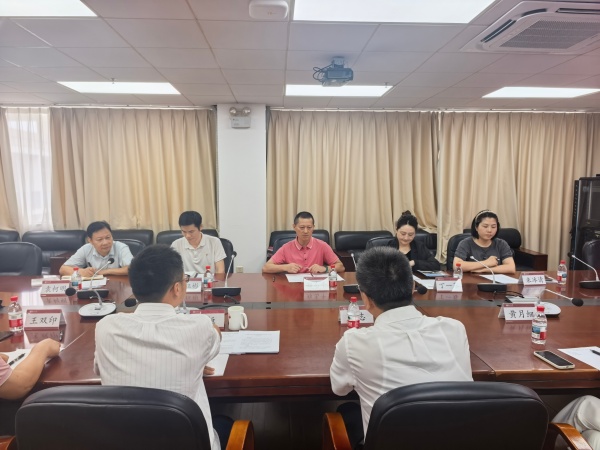
The seminar drew to a successful close in a candid and pragmatic atmosphere. Both sides agreed to take the great discussion as an opportunity to strengthen collaboration, tackle the easier issues first and then the harder ones, and resolve problems one by one, jointly advancing the development of the School of Marxism and bringing the teaching quality of ideological and political courses to a new level.