On the afternoon of April 27, 2026, an academic lecture jointly hosted by the School of Marxism, the Guangdong Regional Collaborative Innovation Center for Ideological and Political Courses in Higher Education Institutions (Shenzhen University) and the "Fu Heming Master Teacher Studio" was successfully held in Meeting Room 1600, Huiwen Building, Shenzhen University. Prof. Deng Anqing, Senior Professor of Humanities at Fudan University and Director of the Center for Global Ethics, Fudan University, delivered a brilliant lecture titled "State and Justice: An Attempt to Bring Hegel's Philosophy of Right into the Mainstream of Contemporary Theories of Justice" to the faculty and students of Shenzhen University. The lecture was chaired by Prof. Fu Heming of the School of Marxism, Shenzhen University. Many faculty members and students of the School attended and took part in the discussion.
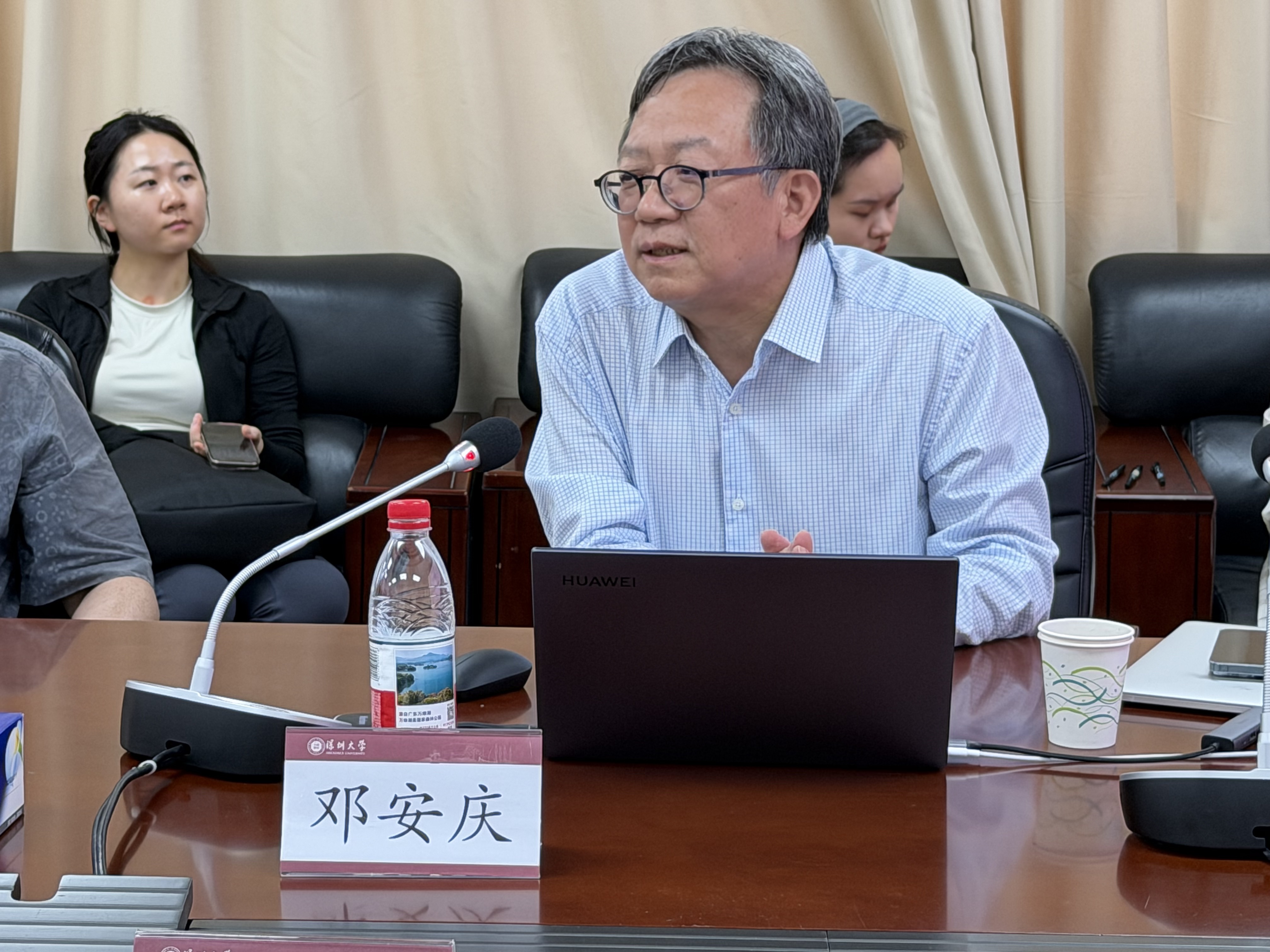
At the outset of the lecture, Prof. Deng Anqing pointed out that Hegel's philosophy of right has long occupied an awkward position of "neglect" in the field of contemporary political philosophy: on the one hand, scholarly interest in Hegel and the literature devoted to him have continued to grow; on the other hand, the substantive content of his system of the philosophy of right has had virtually no practical influence on current discussions in political philosophy. In Prof. Deng's view, the cause of this situation lies in the fact that the mainstream theories from Rawls to Habermas have all returned to the Kantian tradition of rational right, while Hegel's doctrine of the state and his theory of justice have been, deliberately or otherwise, ignored. He proposed that today there is a serious need for an attempt to bring Hegel's philosophy of right back into the mainstream dialogue of contemporary theories of justice.

First, Prof. Deng analyzed the shortcomings in the contemporary revival of Hegel's philosophy. Citing an observation by Honneth, he noted that although communitarian theorists such as Charles Taylor, Michael Walzer and Alasdair MacIntyre carried out a political-philosophical movement in the opposite direction, they not only failed to secure a legitimate place for Hegel's philosophy of right, but actually kept the greatest possible distance from Hegel's political philosophy. This has produced a "dilemma": interest in Hegel is growing and the scholarly literature is expanding, yet his philosophy of right still seems unable to help us understand our present political and philosophical situation. Prof. Deng argued that to change this state of affairs, we must confront a fundamental question — how Hegel understood "state" and "justice," and what inspiration that understanding can offer to normative political philosophy today.
Second, Prof. Deng focused on Honneth's approach to reviving Hegel's philosophy of right and on its significance. Honneth's approach is to understand Hegel's "Recht" (right/law) not merely as law or right, but as "all those social conditions or forms of social existence that can ensure the realization of the human free will." In this way he hopes to bring Hegel's theory of justice into the contemporary mainstream and thereby overcome the deficiencies of the Kantian–Rawlsian tradition. At the same time, he declares that he will not revive Hegel's concept of the state or his ontology of spirit, nor will he rely on the methodological guidance of the Science of Logic. Yet Prof. Deng pointed out that although this "dissolution of the state" approach of Honneth's brings Hegel closer, to a certain extent, to contemporary analytic political philosophy, it may have jettisoned what is most vital in Hegel's philosophy of right — namely, the "principle of freedom" and the "principle of world history" borne by the state as an ethical substance.
Finally, Prof. Deng expounded his own understanding of what a genuine Hegelian theory of justice would be. Quoting the view of Avineri, he argued that Hegel, armed with the thought of Montesquieu and Herder, took up the question left open by Rousseau and thereby became "the first great political philosopher of modern society." Hegel's conception of the state is grounded not in "understanding" (Verstand) but in "reason" (Vernunft): it is "a rational state existing in and for itself." This conception of the state establishes two core principles of the modern state — the "principle of freedom" and the "principle of world history." As §260 of the Philosophy of Right states: "The state is the actuality of concrete freedom." Prof. Deng stressed that only by returning to this sense of the relationship between state and justice can we truly grasp the contribution of Hegel's philosophy of right: it not only provides an intellectual weapon for criticizing the abstract contractarian conception of the state, but also lays the dialectical theoretical foundation for Marx's later transcendence of civil society and his critique of political economy.
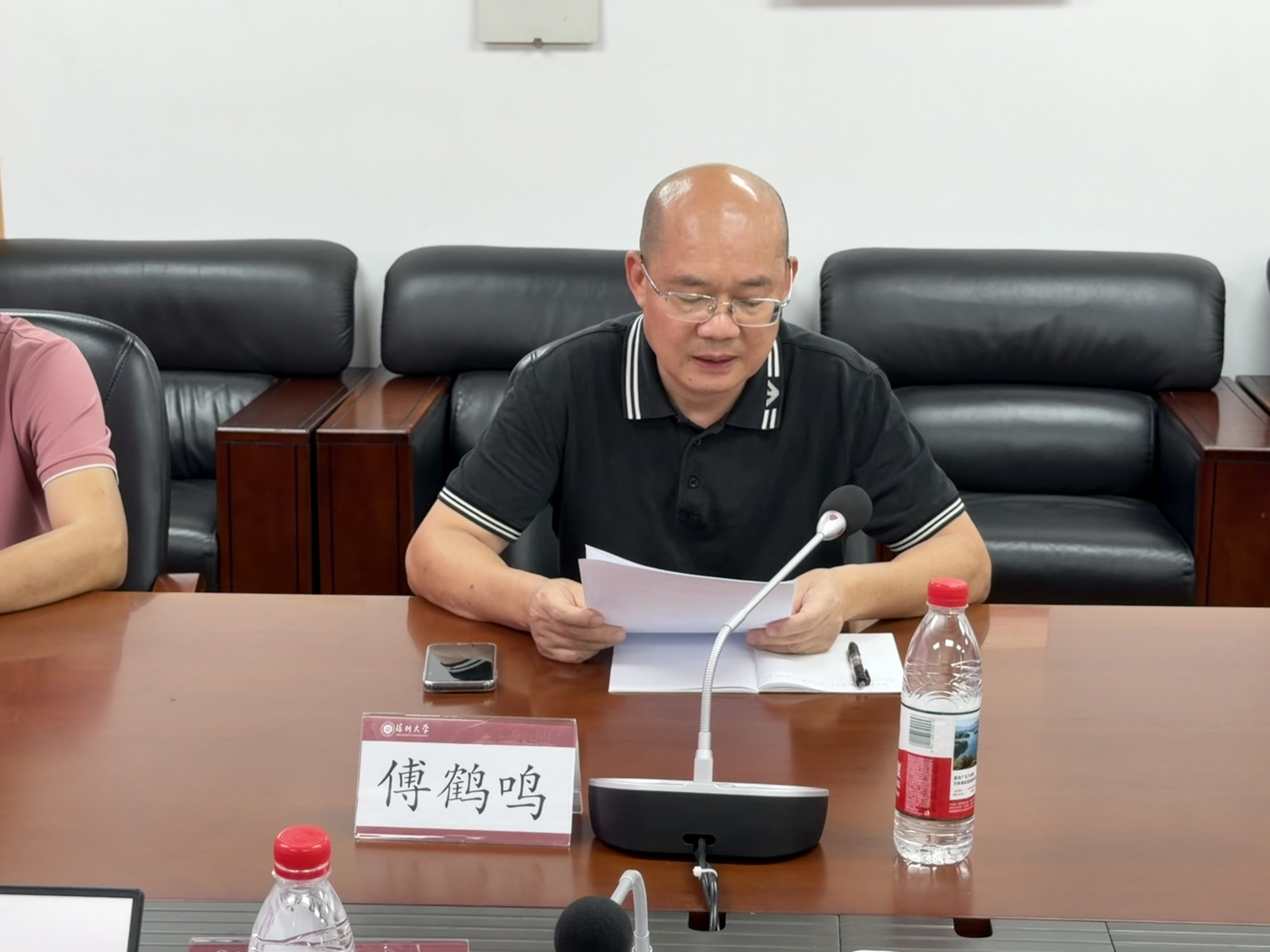
In the interactive session of the lecture, faculty members and students exchanged views with Prof. Deng on such questions as "the similarities and differences between Hegel's theory of the state and Marx's doctrine of the state," "the relationship between Honneth's theory of recognition and Hegel's philosophy of right," and "how contemporary theories of justice should respond to Hegel's concept of ethical life." Prof. Deng offered professional and meticulous answers to each of the questions raised. At the end of the lecture, the moderator, Prof. Fu Heming, thanked Prof. Deng Anqing for his brilliant presentation and delivered concluding remarks, noting that the lecture was grand in vision and marked by a sharp sense of the problematic, and that it offered important inspiration for understanding the history of Western political philosophy and the theoretical sources of Marxism. The lecture drew to a successful close amid warm applause from the faculty and students.