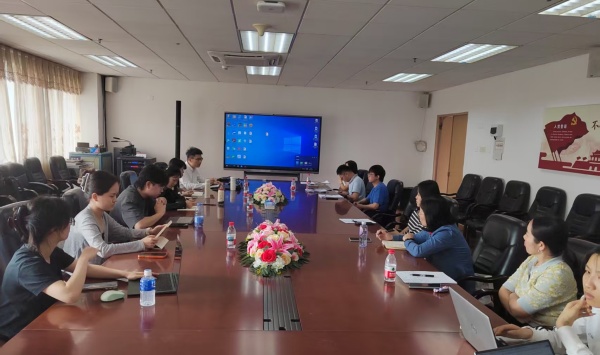
On the afternoon of May 6, 2026, the academic lecture "What Kind of Marxism Is Needed in the Age of Artificial Intelligence," jointly hosted by the School of Marxism, the Institute of Reform and Opening-Up Studies and the Guangdong Regional Collaborative Innovation Center for Ideological and Political Courses in Higher Education Institutions, was successfully held in Meeting Room 1500 of Huiwen Building. The lecture invited Professor Tu Liangchuan of the School of Marxism, South China Normal University, as the keynote speaker to engage in in-depth sharing with the teachers and students of our School. The lecture was chaired by Ren Heng, Vice Dean for Teaching of the School.

At the outset of the lecture, Professor Tu Liangchuan raised a question: as a theory for understanding history, how can Marxist theory develop a dimension suited to the era of artificial intelligence? He then noted that artificial intelligence has opened a wholly new stage in the development of human society; it is not merely a new technological system constructed by humanity, but also a confirmation of the truth and practical power of thought. It has propelled human society into a new intelligent era distinct from the primitive, industrial and automation eras, and transformed social structure from the traditional dualistic structure of "humans and things" into a ternary structure in which humans, artificial intelligence and things coexist. This epochal change raises three fundamental questions: whether human subjectivity has changed; whether intelligent technology can possess human attributes; and whether there is any essential difference between being replaced by technology and the traditional replacement of things. These three questions ultimately come down to a wholly new reconstruction of subjectivity under the field of human activity, ways of cognition and technological symbiosis; artificial intelligence has thereby become a new form of social existence, profoundly changing the pattern of the times.
First, Professor Tu Liangchuan pointed out that artificial intelligence is compelling Marxism to achieve an innovation in its theoretical form. The value of artificial intelligence does not lie in simply modifying the content of Marxist theory, but in driving it to interpret this age of artificial intelligence in a wholly new form — that of "theorizing real-world problems." Artificial intelligence blurs the civilizational boundaries between humans and machines, and between nature and technology, and redefines the value of people's intrinsic capacities. The traditional definition of human essence centered on labor has been broken, and capacities beyond labor — such as art, critique and leisure — more prominently highlight human uniqueness. On this basis, Marxism needs to accomplish innovation in four core concepts, namely innovating the materialist viewpoint, optimizing the logic of social analysis, reshaping the conception of cognitive capacity, and upgrading the logic of social critique. At the same time, it needs to respond to new problems such as the disappearance of the traditional boundary between materialism and idealism and the impact on the traditional concept of reality, thereby enriching the contemporary connotations of historical materialism.
Second, addressing epistemological questions, Professor Tu Liangchuan held that artificial intelligence is driving a transformation in Marxist epistemology. Artificial intelligence is no longer an external tool but a constituent of cognition; it drives Marxist epistemology to upgrade from the "practice–cognition" dualistic structure to a ternary structure. It requires human cognition to shift from passive observation to active construction, compelling cognitive capacity to move from quantitative accumulation to a qualitative leap. In this process, the basic principle of Marxism that "practice determines cognition, and cognition in turn acts on practice" has been newly confirmed. At the same time, Marxism must, on an epistemological basis, construct a philosophy of mind oriented to the intelligent era, responding to core questions such as the validity of machine cognition and innovation in cognitive activity, and becoming the theoretical framework with the greatest explanatory power for the cognitive revolution brought by artificial intelligence.
Third, Professor Tu Liangchuan held that we need to expand Marxism's "theory of human nature" in the age of artificial intelligence. He pointed out that the greatest characteristic of the age of artificial intelligence is its capacity to think, which has given rise to the question of whether machines possess subjectivity. Marx held that human nature is non-fixed and generative. Although artificial intelligence exhibits quasi-subject behavioral features, it cannot produce genuine consciousness and subjectivity, because the conceptual value of artificial intelligence remains constrained by program logic; it reflects the instability of human nature, and therefore it will not replace humans. In a technological way, it compels humanity to recover its humanity, driving human development to shift from possessing rights to having capabilities, and from repetitive labor to creative activity. Marxism needs to ground itself in the free and all-round development of human beings, establish the principles of human-machine symbiosis and technology for good, and make clear that artificial intelligence is the objectification of human essential powers that ultimately serves human emancipation and the realization of value.
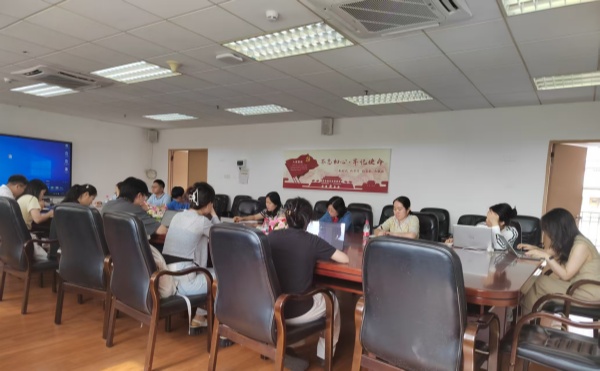
In the interactive dialogue session, Professor Tu Liangchuan engaged in in-depth and lively discussion with the moderator, Associate Professor Ren Heng, Associate Professor Liu Hong, and the students present, on questions such as "whether AI will replace the subject position of human beings, and how, from the perspective of Marx's all-round development of human beings, to construct a theory with the essential value of humanity," and "from the phenomenological perspective, if the constitution of the subject does not start from humans, will artificial intelligence also manifest autonomously and thereby dominate humanity? And is there a non-equality between this and the view that considers the power of human activity from the dimension of the life-world?"
At the end of the lecture, the moderator, Associate Professor Ren Heng, thanked Professor Tu for bringing us a splendid academic feast and delivered concluding remarks, noting that this academic lecture not only made us clearly understand the question of what kind of Marxism is needed in the age of artificial intelligence and provided a theoretical reference for developing a Marxism of the times on the basis of adhering to Marxist historical materialism and the theory of the all-round development of human beings, but also enabled us to correctly understand that artificial intelligence, as a thing, is essentially a tool serving the all-round development of human beings rather than a tool for seeking profit and dominating others, and that its emancipatory dimension must be combined with the emancipatory dimension of Marxism. The lecture drew to a successful close amid warm applause from the faculty and students.