In response to the strong enthusiasm across society for studying and implementing the spirit of the Fourth Plenary Session of the 20th CPC Central Committee, held in Beijing from October 20 to 23, 2025, the School of Marxism at Shenzhen University fully leveraged its theoretical and talent advantages to meet the grassroots demand for learning the Party’s latest guiding principles. On November 14, the School’s faculty visited Luhe County, Shanwei City to carry out grassroots theoretical publicity activities. A total of seven sessions were conducted, marking the fourth batch of paired grassroots theoretical lectures jointly organized with Shanwei City this year.
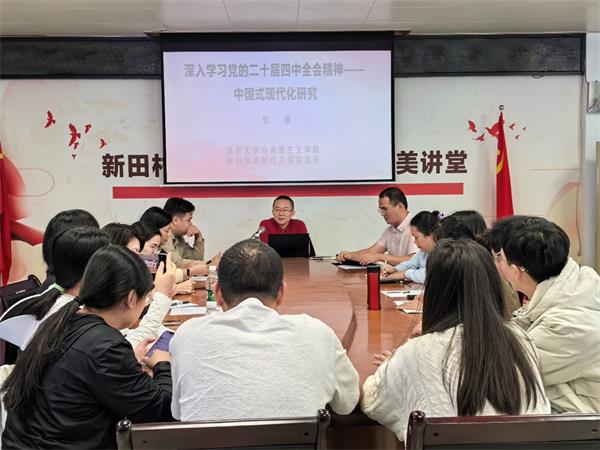
Bao Yi: “Studying the Spirit of the Fourth Plenary Session — Research on Chinese Modernization”
At the New Era Civilization Practice Center in Xintian Town, Associate Professor Bao Yi delivered a lecture titled “Studying the Spirit of the Fourth Plenary Session — Research on Chinese Modernization.” Bao explained that the Plenary Session adopted the CPC Central Committee’s Recommendations for Formulating the 15th Five-Year Plan for National Economic and Social Development, outlining China’s development blueprint for the next five years and declaring the firm resolve to advance Chinese modernization. He then elaborated that Chinese modernization is socialist modernization under CPC leadership—sharing common features with global modernization yet distinguished by China’s unique national conditions. He expounded on five defining characteristics: modernization of a huge population, modernization for common prosperity, modernization combining material and cultural-ethical progress, modernization of harmony between humanity and nature, and modernization through peaceful development, concluding with an analysis of its global significance. His clear logic and abundant examples earned high praise from attendees.

Huang Jichao: “Promoting High-Quality Development in United Front Work in the New Era”
At the New Era Civilization Practice Station in Dongkeng Community, Dongkeng Town, Associate Professor Huang Jichao delivered a lecture titled “Promoting High-Quality Development in United Front Work in the New Era — Studying the Spirit of the Fourth Plenary Session.” Focusing on united front work, Huang shared learning insights related to the Session, emphasizing the goals set out in the 15th Five-Year Plan to build a high-level socialist market economy and strengthen the driving force for high-quality development. He discussed the meaning and significance of adhering to and implementing the principle of “two unwavering commitments” to promote complementary advantages and common development among various forms of ownership.
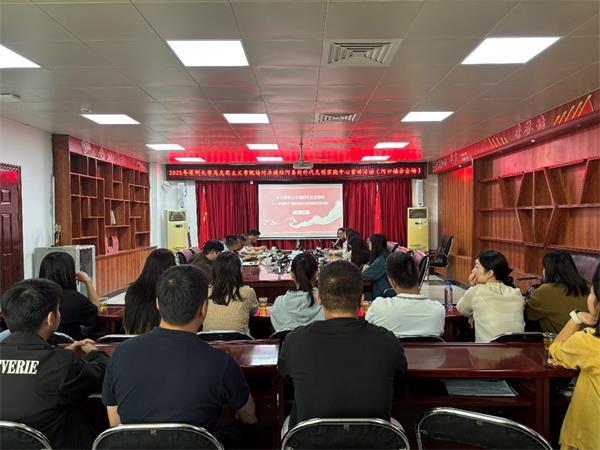
Zhao Leilei: “CPC’s Pursuit of Self-Reliance and Strength in Science and Technology — A Historical Perspective”
At the New Era Civilization Practice Center in Hekou Town, Assistant Professor Zhao Leilei delivered a lecture titled “Studying the Spirit of the Fourth Plenary Session — A Historical Examination of the CPC’s Scientific and Technological Self-Reliance.” Using the Plenary Session’s emphasis on “accelerating high-level scientific and technological self-reliance” as a key measure for developing new quality productive forces and supporting Chinese modernization, Zhao reviewed the historical stages of the CPC’s pursuit of technological self-reliance. She also described how technological progress impacts people’s daily lives and highlighted local innovation models in Luhe County such as the development of “Science and Technology Courtyards.”
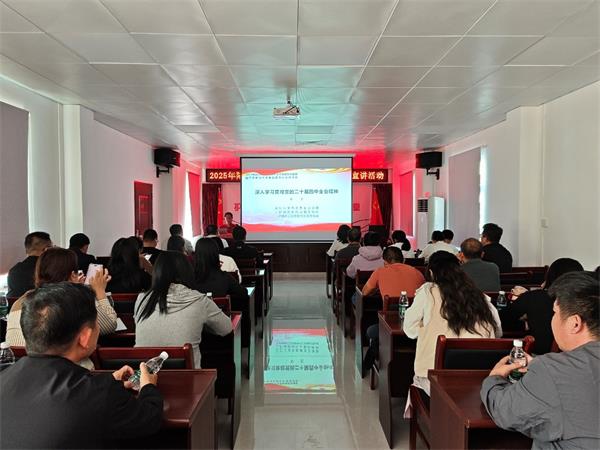
He Jie: “Studying and Implementing the Spirit of the Fourth Plenary Session”
At the New Era Civilization Practice Station in Hu’er Village, Shanghu Town, Assistant Professor He Jie delivered a lecture titled “Studying and Implementing the Spirit of the Fourth Plenary Session.” He reviewed and interpreted the key messages of the Session, offering an in-depth analysis of the 15th Five-Year Plan as a concentrated expression of the institutional advantages of socialism with Chinese characteristics and national governance modernization. He also shared insights on how grassroots cadres could better implement the Session’s spirit.

Chen Xiangyu: “Interpreting the Policies of the Fourth Plenary Session”
At the New Era Civilization Practice Station in Gaofeng Village, Shuichun Town, Assistant Professor Chen Xiangyu delivered a lecture titled “Interpreting the Policies of the Fourth Plenary Session of the 20th CPC Central Committee.” He stressed that the Session played a pivotal role in connecting the achievements of the 14th Five-Year Plan with the strategic deployment of the 15th Five-Year Plan. From an economic perspective, Chen provided detailed explanations of key tasks, such as building a modern industrial system, strengthening the real economy, accelerating scientific and technological self-reliance, fostering new quality productive forces, expanding the domestic market, creating a new development pattern, and improving the socialist market economy system. He highlighted how these goals directly relate to people’s daily lives.

Li Ming: “Studying General Secretary Xi Jinping’s Important Expositions on Pioneering and Demonstration”
At the New Era Civilization Practice Station in Luoxi Village, Luoxi Town, Assistant Professor Li Ming delivered a lecture on General Secretary Xi Jinping’s recent remarks regarding Guangdong’s role as a “pioneer, front-runner, and experimental zone” of reform and opening-up. He explained the historical origins, theoretical foundations, core ideas, and practical significance of Xi’s expositions on pioneering and demonstration. In light of the Plenary Session and the 15th Five-Year Plan recommendations, Li emphasized the importance of developing local strengths, addressing shortcomings, promoting特色产业, and advancing rural revitalization.

Li Shengtao: “The CPC’s Tradition of Investigation and Research”
At the New Era Civilization Practice Institute in Hetian Town, Assistant Professor Li Shengtao delivered a lecture titled “The CPC’s Tradition of Investigation and Research.” Beginning with Mao Zedong’s field investigations in Jinggangshan, he analyzed how to conduct symposiums and select research subjects, using “On the Ten Major Relationships” as an example to explain how to listen to and present research findings. He concluded by stressing that implementing the spirit of the Fourth Plenary Session requires solid investigation and research—offering grassroots cadres practical guidance and direction.
This year, the School of Marxism at Shenzhen University successfully carried out four batches totaling 30 sessions of grassroots theoretical lectures in partnership with the Shanwei New Era Civilization Practice Centers. These lectures received unanimous praise from grassroots Party members and local residents, fulfilling the important mission entrusted to provincial key Schools of Marxism by the Publicity Department of the Guangdong Provincial Party Committee.