To thoroughly study and implement the spirit of the Fourth Plenary Session of the 20th Central Committee of the Communist Party of China, to implement the relevant arrangements of the Recommendations of the CPC Central Committee for the 15th Five-Year Plan, to earnestly study and comprehend General Secretary Xi Jinping's series of important expositions on establishing and practicing a correct view of political achievements, and to solidly carry out the study and education campaign on establishing and practicing a correct view of political achievements, on May 26, 2026, the School of Marxism of Shenzhen University selected and sent nine outstanding teachers to the counties, county-level cities and districts of Meizhou City to carry out grassroots theoretical outreach activities.
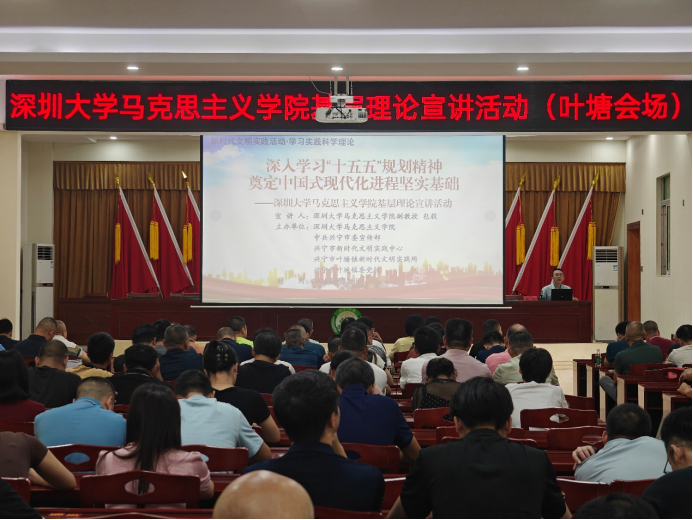
Associate Professor Bao Yi delivered a special lecture titled "Deeply Studying the Spirit of the 15th Five-Year Plan to Lay a Solid Foundation for the Process of Chinese Modernization" at the New Era Civilization Practice Center of Yetang Town, Xingning City. Drawing on his extensive knowledge, Bao Yi gave a vivid presentation covering such aspects as "formulating and implementing five-year plans is an important way in which the Party governs the country," "the notable features of formulating and implementing five-year plans," "the profound and complex changes facing China's development environment during the 15th Five-Year Plan period," and "the strategic arrangements for economic and social development during the 15th Five-Year Plan period." Using plain, easy-to-understand language, he closely linked scientific theory to the practice of grassroots work. With lofty vision, clear emphasis and abundant cases, his lecture provided a guide to action for how grassroots work should be carried out during the 15th Five-Year Plan period.
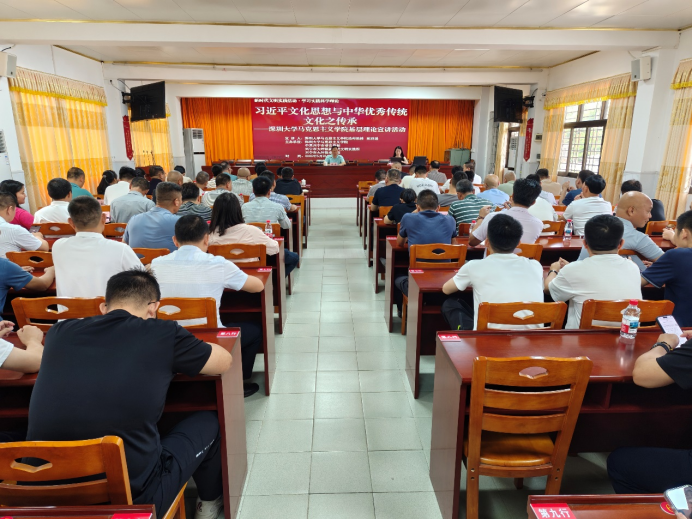
Assistant Professor Chen Qunyao went to the New Era Civilization Practice Center of Daping Town, Xingning City, to explain "Xi Jinping Thought on Culture and the Inheritance of China's Fine Traditional Culture" to grassroots cadres and members of the public. Chen Qunyao holds that Xi Jinping Thought on Culture regards China's fine traditional culture as the spiritual lifeline of the Chinese nation, takes the "two combinations" as its important method, and, by relying on the "second combination," endows China's fine traditional culture with contemporary connotations. It upholds fundamental principles while breaking new ground, promoting the creative transformation and innovative development of traditional culture, tapping the value of traditional virtues, and integrating them into cultural development and the governance of the country. At the same time, it consolidates cultural subjectivity, upholds openness and inclusiveness and a people-centered approach, and uses digital technology to stimulate the vitality of cultural creation and bring cultural heritage to life, thereby injecting spiritual strength into building the modern civilization of the Chinese nation and advancing national rejuvenation.
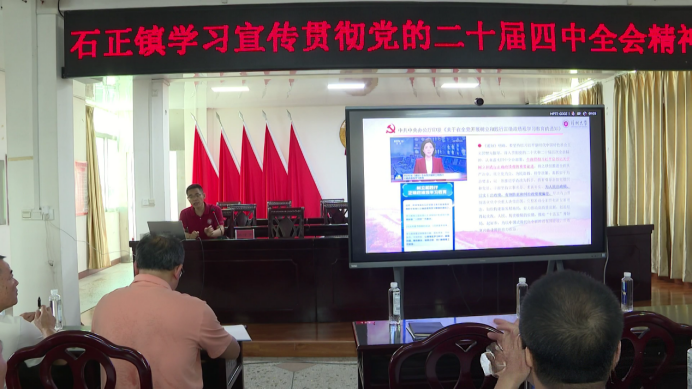
At the New Era Civilization Practice Center of Shizheng Town, Pingyuan County, Meizhou City, Professor Zhang Shoukui gave a lecture titled "Establishing and Practicing a Correct View of Political Achievements and Continuing to Advance Chinese Modernization." He developed his talk along three dimensions — "accurately grasping the core essence of a correct view of political achievements," "deeply understanding the great significance of establishing and practicing a correct view of political achievements," and "effectively establishing and practicing a correct view of political achievements" — and, drawing on both positive and negative typical cases, analyzed in depth the manifestations and harms of distorted views of political achievements. He guided grassroots Party members and cadres to recalibrate the "compass" of their view of political achievements, resolutely reject undesirable work styles such as seeking quick success and instant benefits and resorting to falsification, always hold fast to the original aspiration of serving the people, seek truth from facts, and be willing to take responsibility and act, so as to ensure work is truly implemented and deliver practical benefits that touch the hearts of the people.
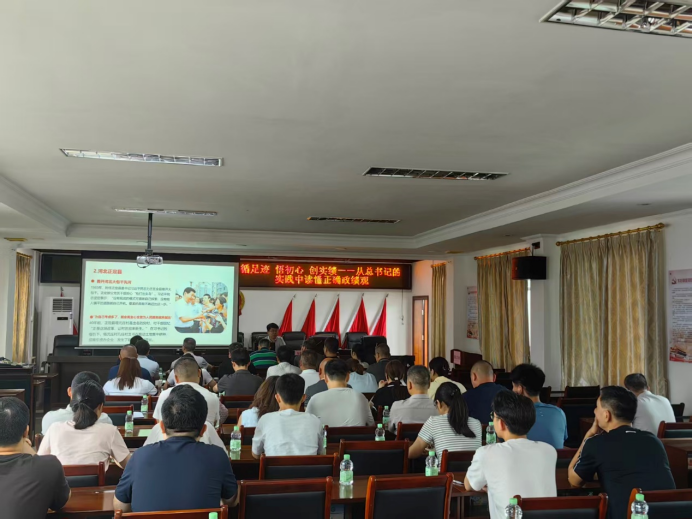
At the New Era Civilization Practice Center of Dongshi Town, Pingyuan County, Assistant Professor Feng Jinyu gave a lecture titled "Following the Footsteps, Reflecting on the Original Aspiration, and Delivering Real Results: Understanding the Correct View of Political Achievements from the General Secretary's Practice." He systematically explained the essence of a correct view of political achievements and the great significance of studying and practicing it, and, through historical allusions and red historical facts, analyzed in depth the serious harms of an erroneous view of political achievements. At the same time, drawing on General Secretary Xi Jinping's footsteps in practice from Liangjiahe onward, he vividly demonstrated the real power of a correct view of political achievements, guiding Party members and cadres to deliver solid achievements through reflecting on the original aspiration.
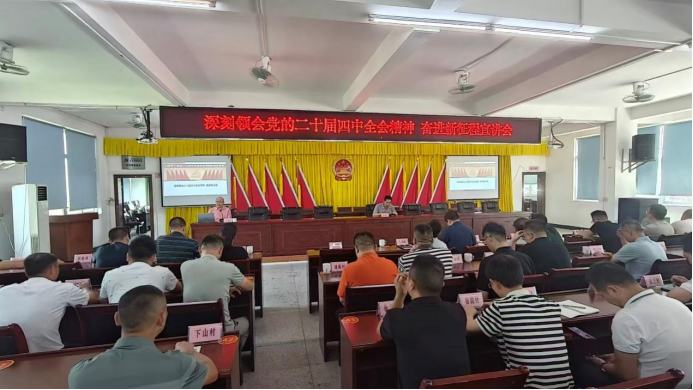
At the New Era Civilization Practice Center of Fengliang Town, Fengshun County, Meizhou City, Professor Wang Shuangyin gave a lecture titled "Deeply Comprehending the Spirit of the Fourth Plenary Session of the 20th CPC Central Committee and Striving Forward on a New Journey." Professor Wang elaborated in detail on four aspects: why General Secretary Xi Jinping attaches such importance to the formulation of the 15th Five-Year Plan; what kind of report card we delivered during the 14th Five-Year Plan period; what blueprint for the future the Fourth Plenary Session of the 20th CPC Central Committee actually charted; and the practical path for implementing the spirit of the Fourth Plenary Session of the 20th CPC Central Committee. At the end of his lecture, Professor Wang noted with full confidence that the blueprint has been drawn and the bugle has sounded, and that we should unite closely around the Party Central Committee with Comrade Xi Jinping at its core, forge ahead with enterprise and fortitude, strive to build a modern socialist country in all respects and basically realize socialist modernization, and constantly open up new prospects for Chinese modernization.
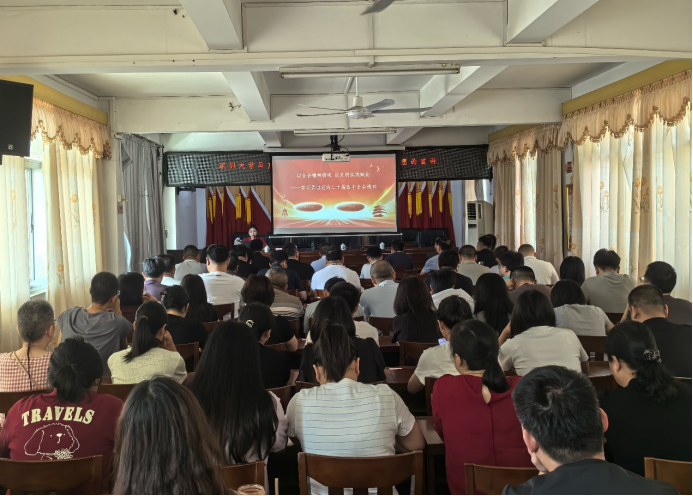
Assistant Professor Lu Yanduo went to the New Era Civilization Practice Center of Beidou Town, Fengshun County, and gave a lecture report titled "Forging the Soul with the Spirit of the Plenary Session and Empowering Through Civilization Practice: Studying and Implementing the Spirit of the Fourth Plenary Session of the 20th CPC Central Committee" to local Party members and representatives of the public. The lecture was divided into six parts: "the question of the times: the spirit of the plenary session sets the course"; "the foundation of practice: civilization positions as fortresses"; "the way of integration: theoretical outreach nurturing the hearts of the people"; "the key to governance: services for people's livelihood showing warmth"; "the trend of civilization: transforming outdated customs and fostering new practices"; and "the strength to forge ahead: taking responsibility through solid action to open up new prospects." The lecture combined theoretical depth with practical warmth, seeking to forge the soul through theory, empower through practice, warm hearts through service, and shape through civilization, so as to work steadily and diligently, strive to open up new prospects in grassroots civilization practice and grassroots governance, and contribute grassroots strength to building a modern socialist country in all respects.
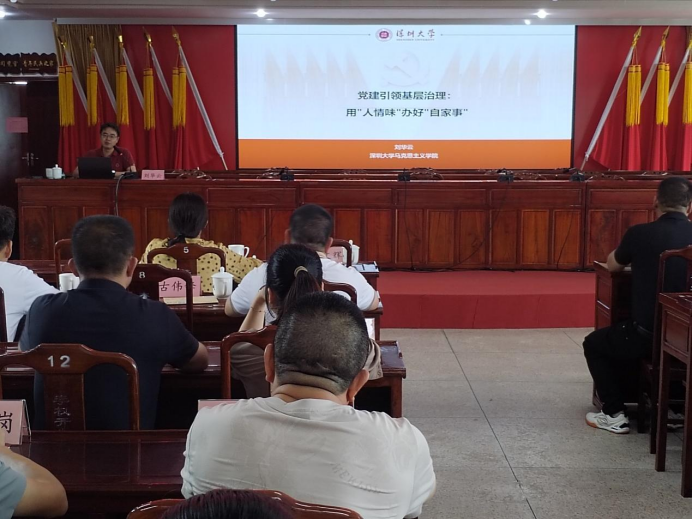
In Wuhua County, Meizhou City, Associate Professor Liu Huayun gave a lecture titled "Party Building-Led Grassroots Governance: Handling 'Our Own Family Affairs' with a Human Touch" at the New Era Civilization Practice Center of Huacheng Town, offering an in-depth interpretation of the "Meizhou practice" of Party building-led grassroots governance. Addressing the problem of a "warmth deficit" in grassroots communication, the lecture took the "Hakka walled houses" of Town G in Meizhou as its central entry point and focused on how local implicit cultures such as Hakka ancestral precepts that discipline the mind and clan ethics can be ingeniously transformed into governance assets for resolving neighborhood disputes. By linking distinctive cases such as Shenzhen–Shanwei pounded tea (lei cha) and Mazu culture in Putian, it presented a panoramic view of a sound governance approach that integrates "emotion, reason and law." The talk was intended to inspire grassroots workers: by taking Party building as the "backbone" and using a "human touch" for flexible supplementation, they can turn grassroots "public affairs" into "family affairs" that people feel close to, ultimately moving toward long-term empowerment and "value co-creation."
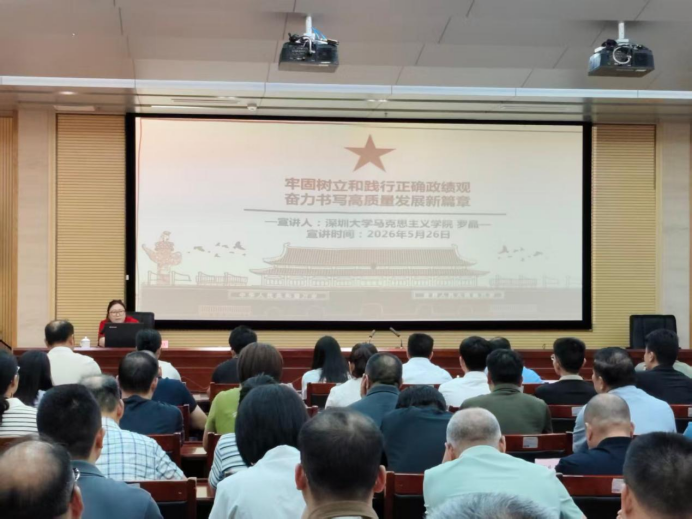
Teacher Luo Jing lectured to Party members and cadres at the New Era Civilization Practice Center of Wuhua County on "Firmly Establishing and Practicing a Correct View of Political Achievements and Striving to Write a New Chapter of High-Quality Development." Centering on the two core propositions of "a correct view of political achievements" and "high-quality development," and taking into account Wuhua County's realities as a main force in the revitalization and development of the former revolutionary base area of Meizhou, the lecture was developed at three levels. First, what kind of achievements "can be carried away" — through the three keywords "solid, lasting and genuine," it explained the core connotations of a correct view of political achievements, stressing that benefiting the people is the greatest achievement and that high-quality development is the absolute principle. Second, with what should a "new chapter" be written — grounded in Wuhua's realities, it proposed a path of "intensive, quality-driven development," focusing on industrial upgrading, urban-rural integration, and people's wellbeing, and setting out Wuhua's path to high-quality development. Third, how to ensure it "does not deviate" — from the three dimensions of making projects the priority, confronting problems directly, and improving assessment, it stressed tempering one's work style through the unity of knowledge and action, judging by real achievements, and creating a strong atmosphere of earnest and pragmatic work.
Assistant Professor Chen Xiangyu came to the New Era Civilization Practice Station of Hengpi Town, Wuhua County, and gave a special lecture titled "Philosophical and Social Reflections on the Development of Artificial Intelligence." Chen Xiangyu holds that the development of artificial intelligence has given rise to a series of philosophical and social reflections, the core of which is not merely a discussion of technological progress itself, but, grounded in Chinese modernization, a question of how we should re-understand "human beings," "intelligence," "responsibility" and "the future" after AI changes the way humans exist, social structures and the value order. AI not only changes what machines can do but also forces humanity to rethink who it is, how we should live together, and toward what kind of future technology should be led.
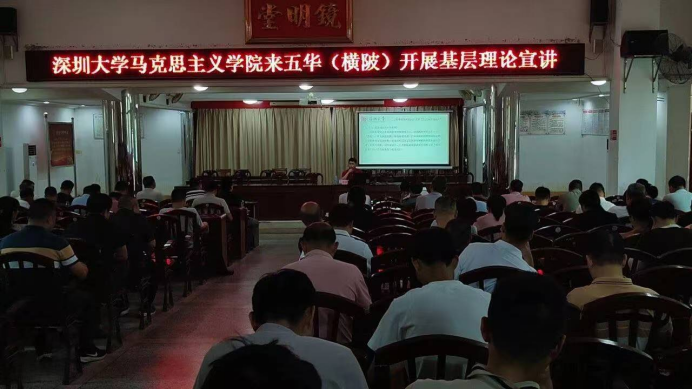
This year, the School of Marxism of Shenzhen University and the Publicity Department of the CPC Meizhou Municipal Committee have deepened university-locality pairing and joint development, with plans to carry out a total of 22 grassroots theoretical outreach activities. Giving full play to its disciplinary and theoretical strengths, the School has offered a series of theoretically solid lecture courses that fit the grassroots context, promoting the implementation of the Party's innovative theories and the latest plenary session spirit at the local level, helping to raise the theoretical literacy and cultural confidence of the people at the grassroots, building consensus in thinking and gathering strength for forging ahead, and contributing theoretical wisdom to the local development of Meizhou.