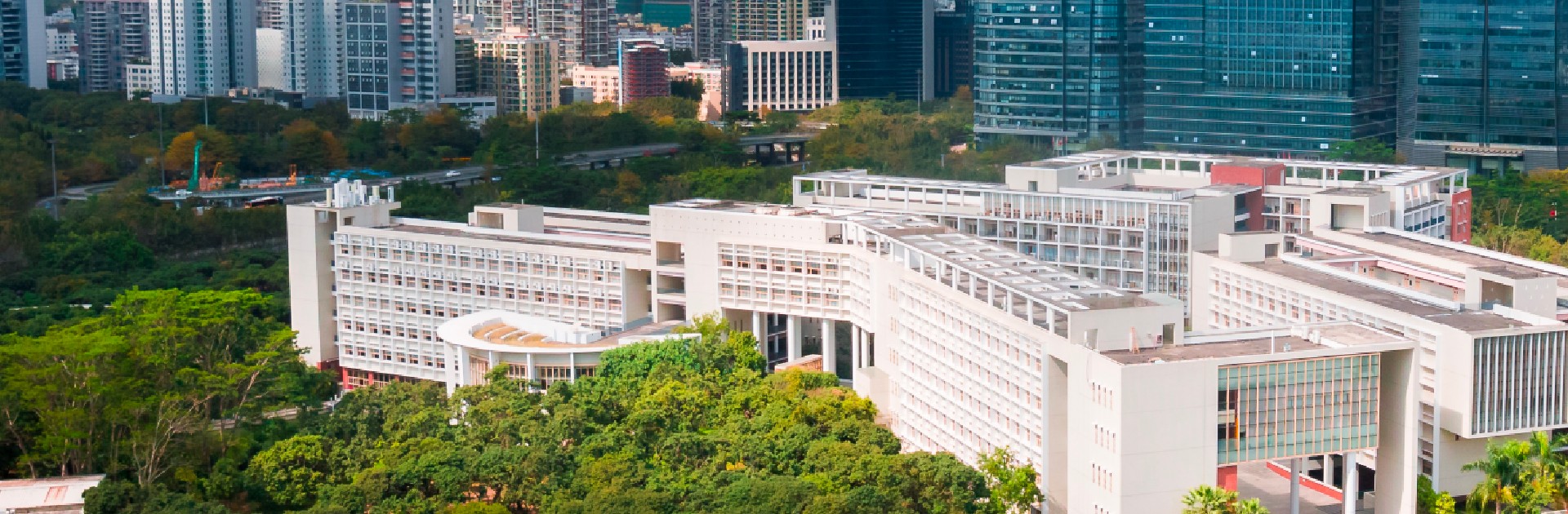
To ensure that the spirit of General Secretary Xi Jinping’s important speech delivered during his inspection of Guangdong takes root and flourishes among the youth, the Party Committee of the School of Marxism at Shenzhen University recently held a symposium in the Wenshan Lake Student Community to study and discuss the key messages of the inspection. Participants included Wang Hong, Member of the Standing Committee of the Shenzhen University Party Committee and Secretary of the Party Committee of the School of Marxism; Wang Ping, Deputy Secretary of the Party Committee of the School; Associate Professor Huang Jichao from the discipline of Modern and Contemporary Chinese History; Counselor Bian Kebing; and student Party member representatives. Through guided study and collective discussion, attendees delved into the rich connotations and practical requirements of the speech.

At the beginning of the symposium, Secretary Wang Hong provided a systematic overview of the core themes of the speech, drawing on General Secretary Xi Jinping’s inspection itinerary from November 7–8 in Meizhou, Guangzhou, and other locations. She focused on Xi’s major statements regarding using comprehensive deepening of reform and opening-up to drive high-quality development, advancing the Guangdong-Hong Kong-Macao Greater Bay Area through sustained efforts, and promoting strict Party self-governance to even greater depth. She emphasized that as a frontier city of reform and opening-up, Shenzhen places its youth in a unique position to deeply understand the contemporary value of the reform and opening-up spirit and the spirit of the Special Economic Zone. Wang Hong also highlighted Xi Jinping’s call to educate and guide young people to inherit the red gene and carry forward the revolutionary spirit, noting that this provides clear direction for the School’s ideological and political work and sets higher expectations for student Party members.

During the discussion session, student Party members shared their insights based on their studies and practice experiences, generating an enthusiastic and engaging atmosphere.
Student Party member Li Yingxia drew on her experience participating in rural revitalization research, noting that Xi Jinping’s emphasis on developing distinctive rural industries at the Meizhou pomelo planting base deeply inspired her. She expressed her intention to participate actively in future summer fieldwork to investigate rural industry development models in the Shenzhen region, contributing youthful insight to rural cultural-tourism integration.
Zhang Jianting focused on the development of the Guangdong-Hong Kong-Macao Greater Bay Area, sharing her personal observations of improvements in intercity rail connectivity and livelihood services. She noted her goal of strengthening her professional competence to better support research on the “soft connectivity” of regional rules and mechanisms.
Lan Shuiqin discussed her understanding from the perspective of red education. She stressed the significance of Xi’s visit to the Ye Jianying Memorial Park and expressed her determination to take responsibility for telling the stories of revolutionary predecessors by promoting red-themed education in classrooms and communities.
Huang Wenge centered his remarks on technological innovation, stating that Xi Jinping’s attention to the integration of technological and industrial innovation motivates him to better combine theory with practice in his academic research and to explore connections between Marxist theory and the development of new quality productive forces.
Wu Xingzi, drawing on her student administrative work, expressed that she will use the speech as guidance to assist counselors in developing more diverse ideological and political activities, helping students deepen their understanding and recognition of the Party’s theories in a subtle and gradual way.

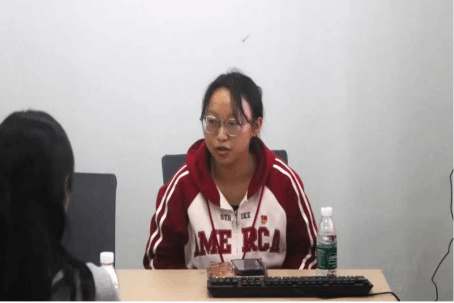
In her concluding remarks, Deputy Secretary Wang Ping stated that the symposium created an effective bridge between theoretical study and community-based practice and represented an important step in expanding the School’s ideological and political education efforts. She presented three expectations for student Party members:
Continue deepening theoretical study to fully and accurately grasp the spirit of the speech;
Actively fulfill responsibilities by transforming learning outcomes into concrete actions in volunteer service and academic research;
Exert exemplary leadership to inspire peers to jointly participate in Guangdong’s practice of advancing Chinese-style modernization.
She emphasized that the School Party Committee will continue innovating learning formats, bringing theoretical study into student communities and closer to young learners, guiding them to always listen to the Party and follow the Party.